

A pipeline is not truly complete when construction ends. It may be welded, coated, buried, connected, and visually inspected, but it still needs to prove that it can operate safely. The most important test is not how the pipeline looks from the outside. The real question is what is happening inside it. There may be debris from construction, dust, welding residue, moisture from hydrotesting, trapped air, or pressure weaknesses at connections. These issues can remain hidden until the system is started. Once product begins to flow, a small internal problem can become an expensive shutdown, a safety concern, or a delay in full operational handover.
Importance of First-Time Readiness
Pipeline commissioning services in Saudi Arabia are essential because energy infrastructure must operate under strict safety, environmental, and performance requirements. Pipelines may carry oil, gas, water, chemicals, or petrochemical products across long distances and difficult site conditions. If commissioning is rushed, the consequences may continue throughout the asset’s life. A properly commissioned pipeline starts with internal preparation. Cleaning removes debris and contaminants. Gauging checks whether the line has internal restrictions or deformation. Testing confirms strength and pressure integrity. Dewatering removes bulk water after hydrotesting. Drying reduces remaining moisture. Purging and inerting prepare the system for safe product introduction.
Why Pipeline Cleaning Comes First
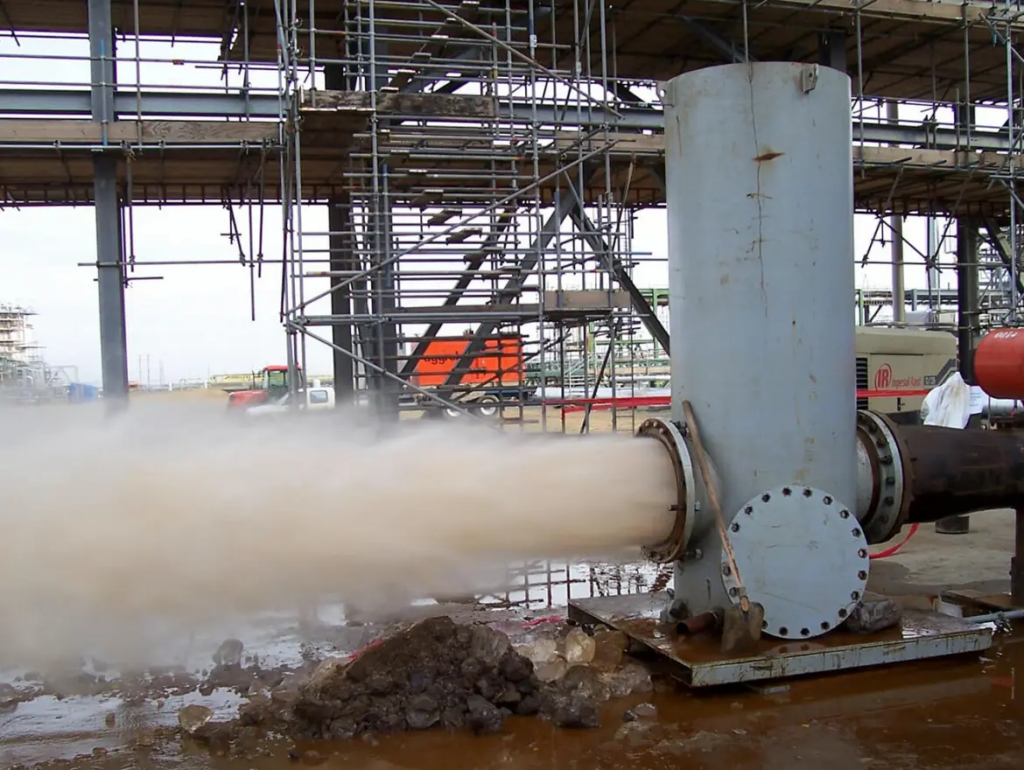
Before any serious testing or start-up activity, the pipeline must be clean. During construction, foreign materials can enter the line. Sand, stones, welding rods, scale, coating fragments, and other debris may remain inside. If these materials are not removed, they can damage valves, instruments, pumps, compressors, filters, and downstream equipment. Mechanical cleaning is commonly used to push cleaning tools through the pipeline and remove unwanted material. Chemical cleaning may also be required when scale, deposits, or hydrocarbon residues are present. The aim is simple: the system should not carry construction waste into operation.
Gauging and Internal Verification
A pipeline must not only be clean; it must also be physically clear. Gauging helps confirm whether the internal bore is suitable for operation. If there is a dent, ovality, obstruction, or internal restriction, the pipeline may not perform as designed. This stage is especially important before running inspection tools or introducing products. Finding internal restrictions early helps avoid tool damage, flow problems, and unexpected stoppages. It is far easier to correct a problem during commissioning than after the pipeline becomes part of an active network.
Hydrotesting and Pressure Confidence
Hydrotesting is one of the main ways to confirm that a pipeline can handle pressure. The line is filled with water and pressurized to a specified level to verify strength and integrity. It is a critical part of proving that the system is safe for service. However, hydrotesting creates its own follow-up requirement: water removal. After testing, the pipeline cannot simply be left wet. Remaining water may cause corrosion, product contamination, or operational complications. This is why dewatering and drying are central parts of commissioning.
Dewatering and Drying After Testing
Dewatering removes the bulk water left after hydrotesting. Drying deals with the moisture that remains after dewatering. Both steps are important. Even when a pipeline appears drained, low points and internal surfaces can still hold moisture. In the middle of large energy projects in Saudi Arabia, these steps often determine whether a pipeline is accepted for start-up or sent back for additional preparation. A dry pipeline supports smoother operation, protects internal surfaces, and reduces the chance of moisture-related problems. Drying is especially important for gas pipelines, where internal moisture can cause hydrate-related risks or quality issues. It is also relevant for systems where product purity and corrosion control are priorities.
Purging and Inerting Before Product Introduction
Once the pipeline is clean, tested, dewatered, and dried, the internal atmosphere still needs attention. Air and oxygen may remain inside the system. If hydrocarbons are introduced without proper control, safety risks can increase. Purging and inerting help prepare the internal environment. Nitrogen is commonly used because it is dry and inert. It can remove oxygen and create safer conditions before product introduction. This is where regional experience with oil & gas nitrogen services in Iraq also becomes relevant, because similar safety principles apply across oil and gas systems that require controlled atmospheres before start-up.
The Best Service Provider
Pipeline commissioning is the bridge between construction and safe operation. It protects equipment, reduces early-life failures, supports safety, and gives operators confidence before product flows through the line. For companies looking for pipeline commissioning services in Saudi Arabia, the real value lies in controlled preparation, not simply completing a checklist. CS Arabia stands out as a major player in this industry as we support pipeline, nitrogen, water, and chemical services for industrial assets, including cleaning, testing, drying, purging, inerting, and wider commissioning support for demanding oil and gas projects.