

The exterior of a pipe may be perfectly normal but have an oval section, dent or restriction on the inside. These geometry changes are important to oil and gas operators, as they may impact flow and even cause localized stresses and can negatively impact future inspection tools.
Caliper pigging is a tool that a pipeline operator uses to measure the inside of a pipeline without cutting into it. It is a method used to inspect that is used across Saudi Arabia, Iraq and the wider Middle East for commissioning, integrity assessment and informed decisions for maintenance.
What does Caliper Pigging Measure?
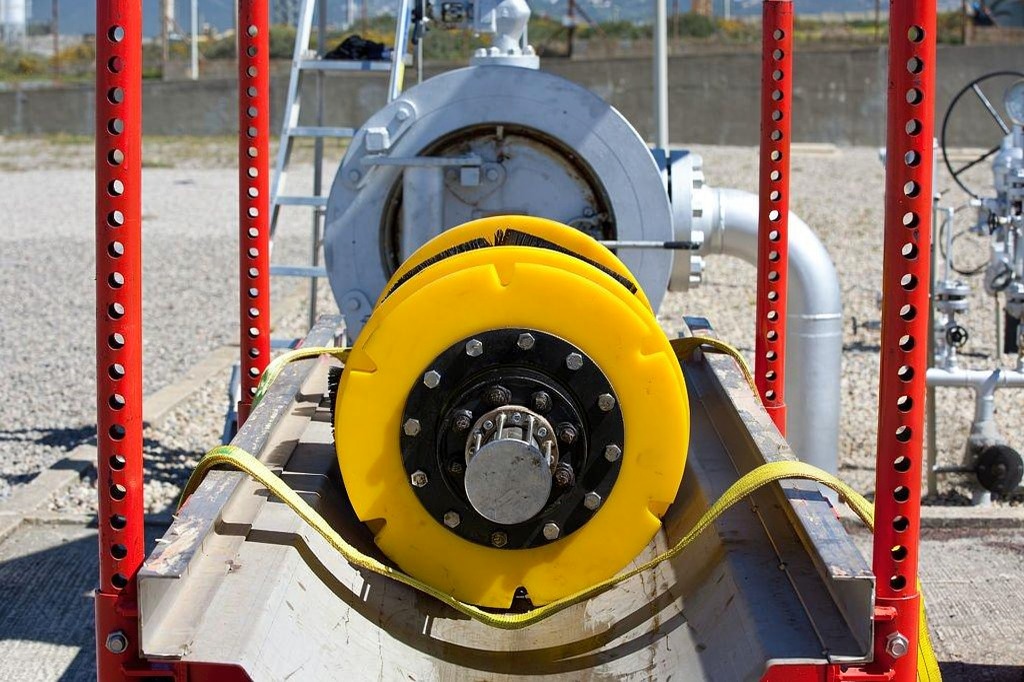
A caliper pig is a device used to inspect a pipeline as it moves through it to determine the changes in the shape and diameter of the pipeline. Mechanical measuring arms or electronic sensors react to changes of the pipe wall when the tool is passing through the system. The information yielded enables engineers to develop a geometry profile that identifies the extent and location where the pipeline is not in line with its expected dimensions. CS Arabia installs electronic caliper systems to measure roundness, diameter variation and internal deformation, and derives information from the measurements to build up a detailed profile of pipeline condition.
Why Pipeline Geometry Matters
Because pipelines are constructed to tolerances, they can be a source of confusion. The operating conditions may also be affected when the shape changes. The deformation is local when a dent is made. Ovality is the condition of a cross section when the normal circular shape is increased in ovality. Buckling can lead to greater structural changes, and restrictions can limit the internal bore size. These can occur during the transportation of materials, construction, burial, ground movement and exposure to external loads. They will also cause problems with subsequent pigging operations when internal passage is narrowed. An early detection of these changes will enable engineers to determine if additional investigation or corrective activity is warranted.
Utilizing Inspection Data to Make Decisions
The caliper pigging value doesn’t stop after the tool arrives at the receiver. Engineers need to analyze the measurements, recognize significant geometry changes and compare them to geometry design tolerances or project acceptance criteria. Then, location information can be used to prioritize maintenance efforts on individual sections of the pipeline, instead of unnecessarily inspecting or excavating expansive areas. This can be particularly useful when the operators want to determine if a deformation needs to be monitored, further inspected or repaired. Accurate geometry information can also be used to support commissioning records that can be compared with the pipeline condition in the future.
Is there any pipeline defect that can’t be detected by Caliper Pigging?
No. This is significant to keep in mind. Caliper tools are used for measuring geometry. They are very helpful in detecting dents, ovality, buckling, expansions and restrictions. Yet, even a geometrically normal pipeline can have corrosion or loss of wall thickness. If the goal is to check metal loss, cracking or other material-related defects, specialized in-line inspection technology may be needed, however. The inspection technology must always be chosen based on the integrity threat being investigated, and not because one pig can inspect all the problems.
Caliper Pigging in Saudi Arabia and Iraq
Internal geometry inspection is applicable for both new and existing oil/gas/industrial pipelines such as those used in Saudi Arabia and Iraq. Caliper inspection can be used to confirm the internal geometry of newly-built lines before handover and before start-up. It can be used to monitor integrity programs if there is a suspicion of deformation or restrictions in operating assets. CS Arabia offers caliper solutions throughout Saudi Arabia and Iraq and claims to be involved in broader industrial activities for oil, gas and petrochemical projects across Saudi Arabia, the GCC and Iraq.
FAQs
What is caliper pigging and how does it work?
Caliper pigging is an inspection method that is sent through a pipeline and records the changes in diameter and shape of the inside. Geometry data is acquired by sensors or measuring arms for engineering analysis.
Why is caliper pigging important for pipeline integrity?
It is useful for detecting dimension abnormalities that may interfere with future inspection tools or with flow. The outcome can inform more specific integrity decisions.
Can caliper pigging detect dents, ovality, and internal defects?
It is able to identify ovality, buckling, diameter changes, and other geometry issues as well as dents. However, it is not recommended as a corrosion detection tool nor is it expected to detect any crack or change in wall thickness if it does not cause measurable geometry changes.
Is caliper pigging widely used in Saudi Arabia and Iraq?
Yes. Use of geometry inspection can be used for pipeline commissioning and integrity programs in all major oil/gas markets, including Saudi Arabia and Iraq. CS Arabia offers caliper inspection service in both markets.
Conclusion
The key to effective pipeline inspection is comprehending exactly what is going on inside the pipe. Caliper pigging is used to measure changes in shape and diameter and translate them into meaningful information for the engineer to evaluate against design and operating parameters.
CS Arabia is a wholly electronic caliper inspection and cleaning, testing and other pipeline services for oil and gas operators in Saudi Arabia, Iraq and the rest of the Middle East. The appropriate inspection technology implemented at the appropriate time enables operators to transition from pipeline assumptions to decisions based on geometry data.