

Pipelines do not normally fail in an apparent manner. Problems typically begin without much commotion, a dent, a buckle, a constraint, a shape alteration within the steel that would not make an appearance of being anything wrong on the outside. This is why internal inspection is of great importance. Of the most feasible instruments employed prior to the start of a business and also in the integrity checking, caliper pigging is most suitable on one basis; it assists an operator to know the actual internal position of a line before a tiny flaw will turn into a significant operational issue.
Why caliper pigging Is Important Well before a Failure Occurs
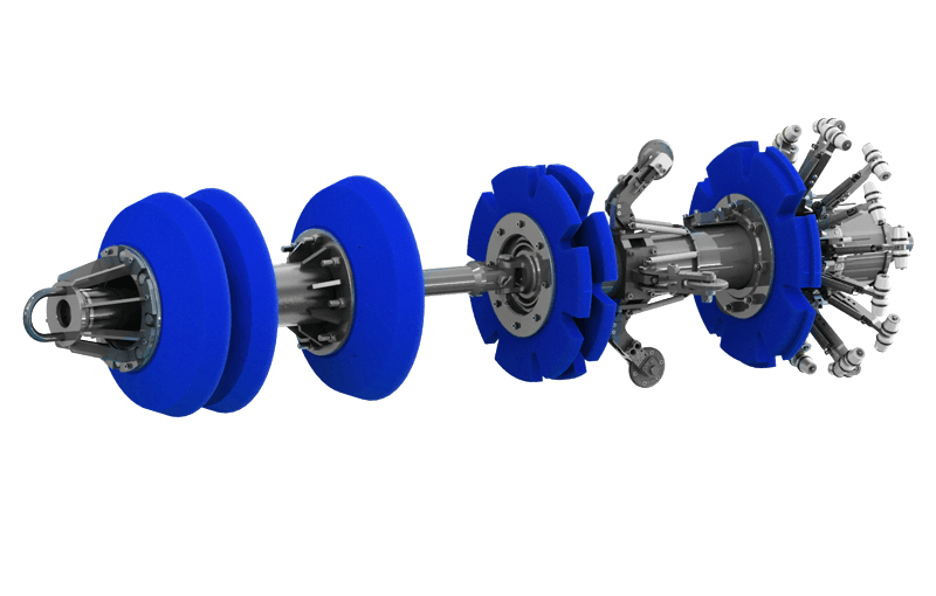
A pipeline may seem finished, fully laid, and ready to use, but still has deformations that influence flow, pressure behavior and long-term safety. Caliper equipment passes through the line and check internal geometry and assist teams in verifying roundness, ovality and dents or restrictions that may not be overlooked. According to the pipeline service pages of CS Arabia, it is a subdivision of a larger readiness procedure that is associated with mechanical cleaning, gauging, commissioning, and roundness checking of projects in Saudi Arabia and Iraq.
The Visibility is the Real Value
Drama is not the greatest asset of this approach. It is clarity. Project teams obtain quantifiable data within the pipeline itself rather than just depending on the drawings, assumptions or surface checks. That changes decision-making. When the line is clean, made and geometrically sound, teams will be able to proceed with greater confidence. In case of an issue, they are able to trouble-shoot it prior to the start-up. That sort of visibility is essential in Saudi Arabia where big pipeline systems are providing energy, petrochemical, and industrial production since delays during activation are often more costly than the delay during preparation.
More than an Inspection Tool
The usefulness of this process, which is particularly valuable, is that it is so easily incorporated into a greater technical process. A line can be cleaned mechanically, followed by internal tolerance inspection, followed by testing, drying and made serviceable. That broader environment is important since geometry does not prepare a system; geometry has to conform with cleanliness, integrity, and safe operating conditions. The latter is where the pipeline commissioning services Saudi Arabia find a strong relation with the inspection work as commissioning is based on the evidence that the system is not only constructed, but that the system is actually ready to be used in the actual conditions.
The reason why simple changes in shape can be serious issues
Even a slight deformation can be felt in a pipeline. The pig passage can be influenced by an internal limitation in the future. Local stress behavior may be altered by a dent. No longer round section can complicate the future inspection run or create a disturbance in anticipated flow conditions. They are not necessarily the instant disasters but may turn into weaknesses down the line in case they are neglected. In Saudi Arabia, where continuity, predictable flow, and safe startup are important to the operators, early detection of such problems is a part of responsible asset management and not a luxury of technical interest.
The Nitrogen Relationship Few Individuals Don’t Know
There is seldom a single service that has pipeline preparedness. Preparation Inspection, cleaning, drying, leak testing, and inerting all tend to be interrelated preparation approaches. This is why the experience working with oil & gas nitrogen services in Iraq will also be significant in the broader context. The nitrogen pages of CS Arabia emphasize the purging, drying, inerting, and leak-testing support, which is used to establish controlled internal conditions during or after the pipeline verification work. That combination of strategy in Saudi Arabia is practically logical due to the fact that internal shape, internal cleanliness and internal atmosphere are all issues that determine whether a system is really prepared.
The Appearance of Strong Field Execution
An effective inspection outcome is based on more than running a tool. It involves planning, proper speed, interpretation and coordination with the subsequent stage of work. Powerful teams understand how to relate data to action. They do not consider inspection as a box-ticking process. They deploy it in order to make actual repair, retesting, drying, or start-up decisions. In Saudi Arabia, where the industrial projects are usually performed within a strict time frame, that disciplined implementation may minimize the rework and enhance confidence in the whole chain of commissioning.
The Core Player
CS Arabia is a company that offers caliper pigging as a component of an overarching industrial service model, which includes nitrogen, pipeline, water, and chemical support, and operates within Saudi Arabia, the GCC and Iraq. Our location emphasizes roundness inspection, mechanical cleaning, commissioning assistance, and mobile field, which represents the reality of the modern project delivery.